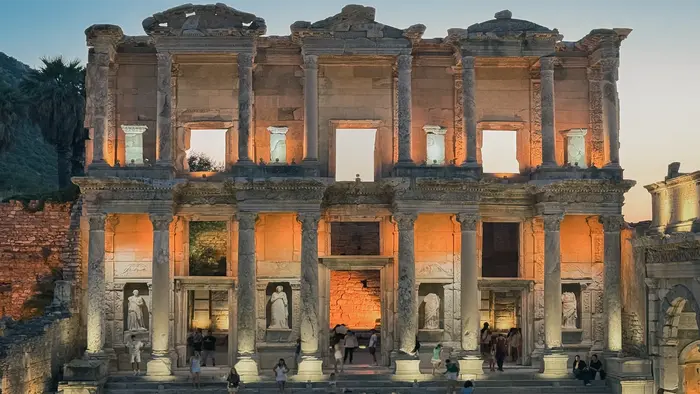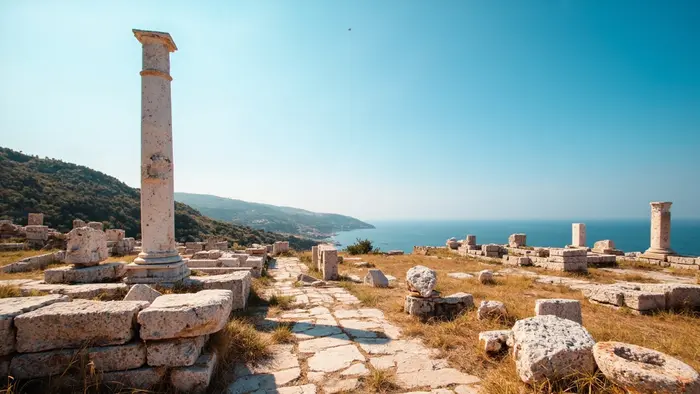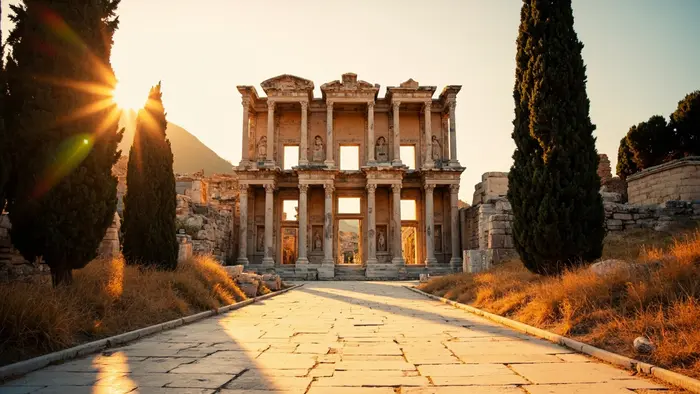

The Ephesus Archaeological Museum sits in the town of Selçuk, a short drive from the ancient city's gates. Its collection spans roughly two thousand years of life in one of the Mediterranean world's most important urban centres — from the Greek foundations of the city through Roman prosperity into early Christian times. The museum was established to shelter artefacts uncovered during excavations that would otherwise be vulnerable to the elements or, historically, to looters. Today it ranks among Turkey's most significant archaeological museums.
The Gallery of Sculptures
The ground floor houses an impressive array of marble work. Roman-period portraits of emperors and civic officials line the galleries, their faces weathered but still expressive. Nearby, sculptural fragments from the Temple of Artemis — once counted among the Seven Wonders of the Ancient World — give a sense of the scale and ambition of that vanished structure. The reliefs and architectural pieces on display speak to the city's wealth and its role as a centre of worship long before the arrival of St Paul.
The Artemis Statue
The most distinctive object in the museum is a bronze statue of Artemis, the goddess of the hunt and protector of wild places. Unlike familiar classical depictions, this Ephesian Artemis is festooned with rows of stylized eyes, breasts, and bees — symbols that scholars associate with fertility, divine watchfulness, and the goddess's local cult. The figure is unlike anything else surviving from antiquity, and standing before it gives a vivid sense of how foreign the Greek pantheon could become when it merged with Anatolian religious traditions.
The Terrace House Collection
Upstairs, the museum recreates the interior world of Ephesus's wealthiest residents. Vibrant frescoes cover the walls — reds, blues, and ochres depicting mythological scenes, geometric patterns, and garden imagery. Mosaics with figured designs lie underfoot. These fragments came from the so-called Terrace Houses, a neighbourhood of well-to-do dwellings set into the hillside near the library. The care taken in presenting these interiors — rather than just the statues and inscriptions displayed in older-style museums — makes the daily life of Roman Ephesus tangible in a way the outdoor site alone cannot achieve.
Practical Notes
The museum provides context for what visitors will see walking through the ancient city itself. Many objects found at specific locations — a particular altar, a inscribed milestone, a decorative threshold — are displayed here with explanatory panels. Those planning a full-day visit to the archaeological site often find the museum an essential complement: objects make more sense after walking the city streets, and the city makes more sense after seeing its furnishings and dedications up close.
Last updated