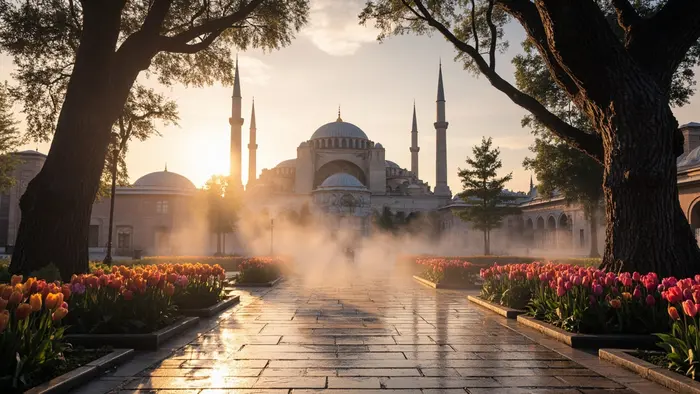
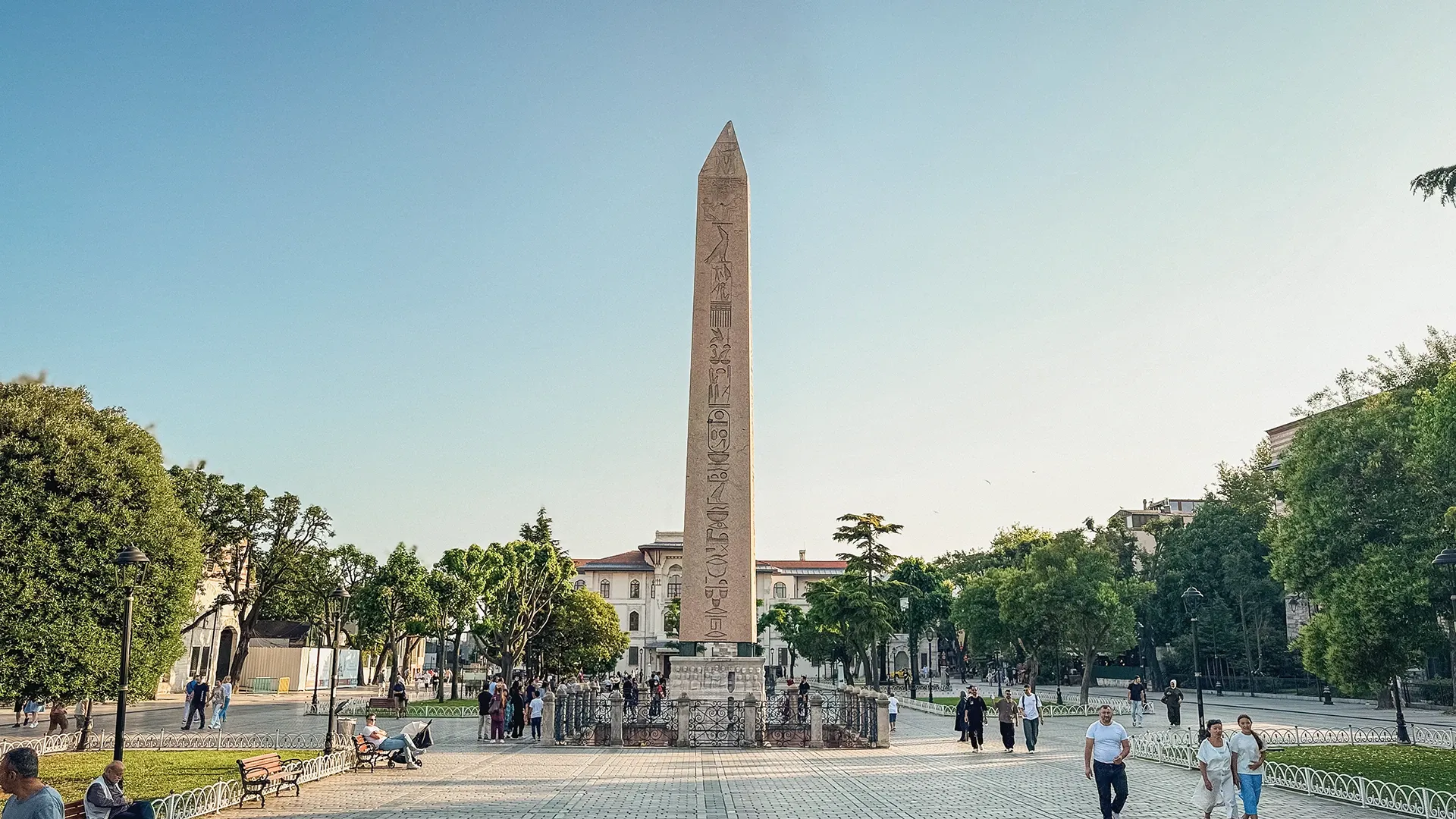
At the centre of Sultanahmet Square, the ancient racecourse where Byzantine emperors once received the roar of fifty thousand spectators is now a spacious, flagstoned esplanade. Stone obelisks stand where horses once thundered past, and plane trees provide shade for visitors pausing on benches. The city moves around it — trams rattle past to the Blue Mosque, and the smell of simit sellers drifts across from the nearby bazaar — but the Hippodrome keeps its Roman silence.
The monuments that survived
Three ancient monuments from different eras still stand in a line down the centre of the Hippodrome's expanse. The Egyptian Obelisk is the oldest — a single piece of red granite carved during the reign of Thutmose III, erected here in the tenth century and still bearing hieroglyphs that document its removal from Upper Egypt. Nearby, a twisted bronze column that once supported a golden serpent and bowls at Delphi stands considerably shorter than it originally did, its upper sections lost to time. A fourth-century obelisk on a square base stands at the far end, its surface worn nearly smooth.
Building and decline
The track itself — a long rectangle with turning posts at each end — was laid out by Roman emperors and widened under Constantine when he refounded the city. For centuries it was Constantinople's civic heart, where emperors addressed the people, factions staged their rivalries, and the city celebrated or mourned together. The Hippodrome fell quiet under Ottoman rule, its stonework quarried for other building projects. What remains today is only a fragment of the original structure, yet the open space itself conveys something of the scale that once impressed visiting ambassadors.
Walking through today
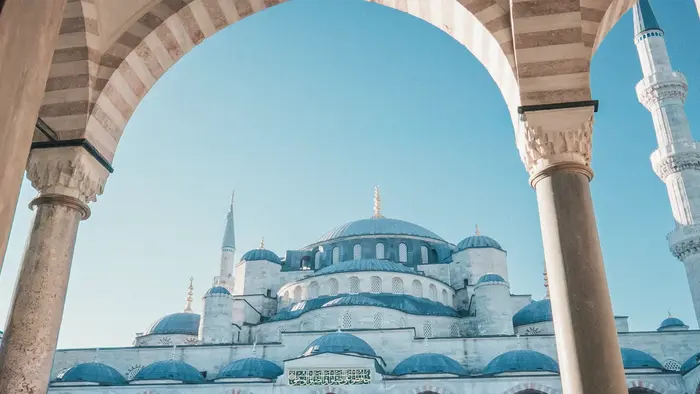
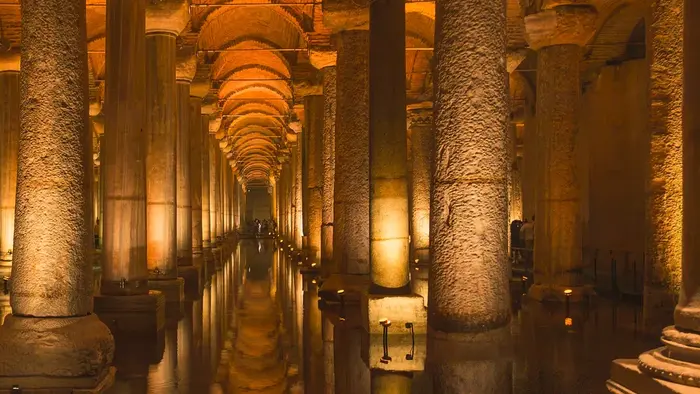
Visitors enter from the southwest, where the old mosque and the German Fountain face each other across the entrance. The flagstones are warm underfoot on a sunny afternoon. You can trace the original track's outline in your mind against the modern square, remembering that the sand beneath your feet was once churned by horses and chariot wheels. The Hippodrome sits within easy walking distance of the Basilica Cistern, the Blue Mosque, and the entrance to the Grand Bazaar, making it a natural stopping point between other sites on the historic peninsula.
Last updated